Conservation Northwest is urging you to take action now to stop a massive new dam proposed for the headwaters of the Chehalis River. The Washington Department of Ecology is accepting comments on the Draft Environmental Impact Statement (DEIS) until February 5, and your voice is urgently needed.
Flooding in the Chehalis Basin is a serious challenge and one that is worsening with climate change. But the proposed mega‑dam is the wrong solution. The DEIS makes clear that this project would come with enormous costs, serious risks, and irreversible damage to salmon, wildlife, water quality, and Tribal treaty‑protected resources while offering only limited flood‑reduction benefits.
Here's what you need to know:
A Mega Dam That Poses Mega Risks
The new expanded dam design would be dramatically larger than earlier concepts, spanning 2,250 feet (0.4 miles) and carrying a price tag estimated at $1.3–$2.3 billion. There is currently no clear long‑term funding plan, and the proposal does not fully account for operations, maintenance, repairs, or lifecycle costs.
The proposed site presents significant unresolved geotechnical issues (including fractured bedrock, landslide risk, and potential faulting) raising major concerns about long‑term feasibility and safety.
Irreversible Impacts to Salmon and Wildlife
The upper Chehalis River is one of only three main spawning areas for Chinook and Coho salmon and Steelhead in the Basin. The DEIS shows the impacts would be devastating:
- Spring Chinook could be driven to extinction by mid‑century.
- Coho salmon would be nearly extinct by mid‑century.
- Fall Chinook and Steelhead would see major, long‑term population declines.
The loss of one of these three key spawning grounds would threaten the overall resilience and survival of these species across the entire Basin.
During a 2025 site visit, biologists documented active salmon redds within 1,000 feet of the proposed dam location -- a clear sign of how vital and productive this stretch of river is for spawning.
The DEIS concludes that many of the ecological impacts would be “significant and unavoidable.” Even with mitigation, much of what would be lost cannot be replaced.
Better Solutions Already Exist
Communities across the basin need real, lasting flood protection -- but a mega‑dam isn’t it. Proven, effective, and more affordable approaches, including the Local Actions Non‑Dam Alternative, are already being developed. These can be implemented sooner, avoid the worst ecological harm, and provide more widespread protection.
The Chehalis is the last major free‑flowing river in southwest Washington. We believe the risks of this proposal greatly outweigh any potential benefits.
Submit your comments to the Washington Department of Ecology here:
https://admin.ecology.commentinput.com/?id=6U54ErkfW
Feel free to adapt the following sample letter by copying it into the portal above.
- Say why you care in your own words. A brief personal connection makes your comment stronger.
- Share 1–2 key concerns. Focus on what matters most to you—fish, cost, safety, alternatives, etc.
- End with what you want Ecology to do. A clear request helps your comment be counted correctly.
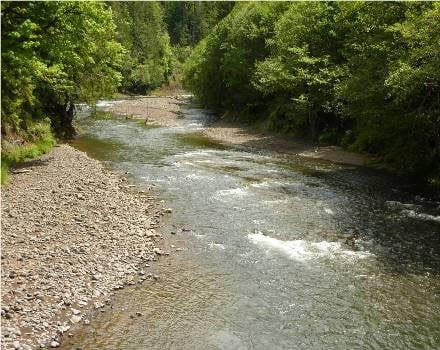
Upper Chehalis River near proposed dam site. Photo by: Steelhead and Salmon Conservation Society.
SAMPLE LETTER:
Dear Department of Ecology,
I am writing to express my concerns about the proposed FRE dam on the upper Chehalis River. Based on the DEIS, the project would cause significant and unavoidable harm to salmon and steelhead, including major losses of Spring Chinook, Coho, Fall Chinook, and Steelhead populations. This stretch of the river is one of the Basin’s key spawning areas, and once damaged, these habitats cannot be replaced.
I am also concerned about the scale and cost of the proposed structure, as well as the unresolved safety and geotechnical risks identified in the DEIS. At an estimated $1.3–$2.3 billion, the dam would offer limited benefits while putting the river’s ecological health and the communities that rely on it at long-term risk.
More effective, less damaging flood‑reduction approaches already exist, including the Local Actions Non‑Dam Alternative. I urge Ecology to pursue these solutions instead of the proposed dam.
Thank you for considering my comments.
Sincerely,
[Name]